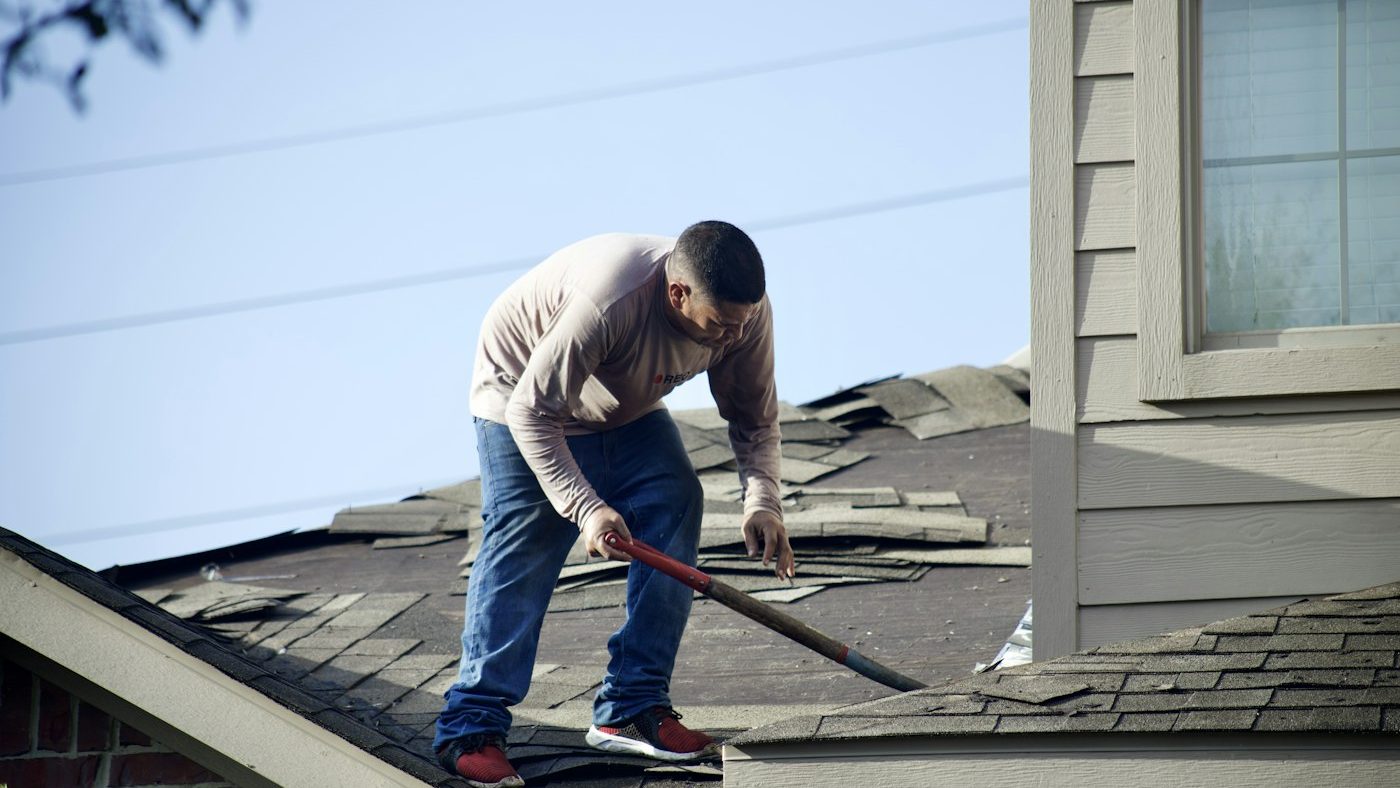
A roofer strips damaged shingles. Colorado homeowners rates rose about 100 percent between 2020 and 2025, the fastest climb of any state. Photo: Zohair Mirza / Unsplash
Colorado home insurance rates rose 100.8 percent between 2020 and 2025, the largest cumulative increase of any state, including an 18.3 percent jump in 2025 alone. The average annual premium is now about $4,310, against a national average near $2,400. The governor’s office, using a different window, puts the rise at roughly 100 percent from 2018 to 2024 against 58 percent nationally, and ranks Colorado the sixth most expensive state to insure a home.
If you own a business in Northern Colorado you have probably felt this twice: once on the house, and once on the building. The reasons are the same, and they are worth understanding before the next renewal lands.
The insurers were losing money
In 2023, Colorado homeowners insurers collected $4.58 billion in premiums and paid out $4.82 billion in losses, a loss ratio of 115 percent before a dollar of overhead. In 2024, after premiums rose to $5.25 billion and the weather cooperated, the ratio fell to 70 percent. One good year does not undo a decade: a report cited by BizWest found Colorado property insurers lost money in eight of the previous eleven years.
Commercial property has held up better. Commercial multi-peril coverage in Colorado ran a 58 percent loss ratio in 2024 on about $1.0 billion of premium, which is why a shop or office renewal has generally moved less than a home policy. The roof over both is the same roof, though, and the same storms hit it.
It is the hail
In February the Division of Insurance published an analysis of twenty carriers covering about 80 percent of the market. Its conclusion: hail accounts for between 26 and 54 percent of a homeowners premium depending on the county, and roughly half of it along the Front Range and Eastern Plains. Wildfire, the peril that gets the headlines, accounts for between 1 and 25 percent, and about 1 percent in Denver. The Division now calls hail the single largest cost driver of homeowners rates in the state.
The history backs that up. Colorado had the second-most hail claims in the country in the most recent three-year tally, behind only Texas. The state’s costliest insured catastrophe was not a fire but the May 8, 2017 Front Range hailstorm: $2.3 billion in insured losses, 167,000 auto claims and 100,600 homeowners claims. Closer to home, the storm that dropped baseball-sized hail on east Greeley in May 2024 left drifts more than a foot deep, flooded homes and led the city to declare a local disaster.
Wildfire is the peril that gets the headlines. Hail is the one that sets the rate.

Where coverage is getting harder to find
The availability problem is real but so far concentrated at the edges. American National stopped writing homeowners policies in Colorado in 2024 after a decade of underwriting losses. The Colorado Sun has reported carriers pulling out of specific markets such as Estes Park condominiums, and nonrenewal rates running higher in rural eastern Colorado than on the Front Range.
The state now has a backstop. The Colorado FAIR Plan, created by the legislature in 2023, began writing residential policies in April 2025 and commercial policies that June. Read the fine print before counting on it: coverage is actual cash value rather than replacement cost, on named perils only, capped at $750,000 for a home and $5 million for commercial property, and you need three declinations from standard insurers to qualify. Uptake has been small, a few hundred policies statewide as of this summer, which suggests most owners are still finding coverage in the regular market, just at a price.
What changed this summer
Two laws are now in effect. Under HB25-1182, which took effect July 1, insurers must tell you in plain language what wildfire risk score they have assigned your property, show how mitigation changes it, respond to an appeal within 30 days, and account for work done on the parcel or by the community. If you are in the foothills west of Fort Collins or Loveland, you can now ask for the number and argue with it.
The second is aimed squarely at hail. SB26-155, signed June 5, creates a 0.5 percent fee on homeowners premiums beginning in 2027, which insurers may not pass through as a surcharge. At least 85 percent of the money, projected at about $20 million a year, goes to grants for hail- and wind-resistant roofs, with the remainder funding roof standards, contractor codes of conduct and loss data. The Division estimates a hail-resistant roof saves a homeowner $82 to $387 a year in premium, depending on the county.
The underinsurance problem
One lesson from the Marshall Fire is worth carrying into any commercial renewal. Studies after the 2021 fire found that between 36 and 74 percent of destroyed homes were underinsured, depending on the study, with the Division of Insurance estimating the gap at $34 million to $155 million across Boulder County. Construction costs moved faster than coverage limits. For a business that owns its building, the question is not whether the premium went up but whether the limit did.
What to do before the next renewal
Ask your agent what share of your premium is hail; the Division’s analysis means they can now answer. Price a Class 4 impact-resistant roof against the discount and, from 2027, against the grant program. Pull your replacement-cost estimate and compare it with what a contractor would actually charge to rebuild this year. If you are in a wildfire zone, request your risk score in writing and appeal it if the mitigation you have done is not reflected. And if you have been declined three times, the FAIR Plan exists, but go in knowing it pays actual cash value on a short list of perils.
For context on where Northern Colorado sits: a 2025 Metro Denver EDC sample cited by BizWest put Fort Collins ($3,745) and Longmont ($3,737) among the lowest homeowners premiums in the state, and Boulder among the highest once risk is adjusted for. Expensive is relative. Up here it is a little less so.
Colorado property insurance at a glance
- Rate change, 2020–2025
- +100.8%, highest of any state
- Average premium
- About $4,310 vs $2,395 nationally
- Hail share of premium
- 26%–54% by county; ~50% on the Front Range
- 2023 loss ratio
- 115% ($4.82B paid on $4.58B collected)
- FAIR Plan caps
- $750,000 residential; $5M commercial; actual cash value
- New laws
- HB25-1182 (wildfire scores, July 2026); SB26-155 (roof grants, fee from 2027)
Sources
- LendingTree 2026 State of Home Insurance, as reported by ColoradoBiz (June 10, 2026)
- Colorado Governor’s Office, homeowners insurance roadmap (April 23, 2026)
- Colorado Division of Insurance, 2023 Statistical Report
- Colorado Division of Insurance, 2024 Statistical Report
- Colorado Division of Insurance, hail and wildfire premium analysis (Feb. 11, 2026)
- CPR News, hail and homeowners premiums (Feb. 11, 2026)
- National Insurance Crime Bureau, hail claims by state 2017–2019
- National Insurance Crime Bureau, May 2017 Front Range hailstorm
- CBS Colorado, Greeley hailstorm disaster declaration (May 2024)
- Insurance Journal, American National homeowners exit (May 31, 2024)
- Colorado Sun, home insurance nonrenewals (Jan. 19, 2025)
- Colorado Division of Insurance, FAIR Plan overview
- Colorado FAIR Plan Association, coverage resources
- Colorado Senate Democrats, HB25-1182 takes effect (July 2026)
- Insurance Journal, SB26-155 signed (June 5, 2026)
- CSU Regional Economic Development Institute, Homeowners Insurance Trends in Colorado (Aug. 2025)
- BizWest editorial citing Metro Denver EDC property-casualty report (Oct. 3, 2025)

If software touches your hiring, Colorado's new AI law applies to you. The clock starts January 1.
SB 26-189 repealed the 2024 AI Act and replaced it with a lighter framework. The impact assessments are gone. The notice duties are not, and they reach employers of every size.

Weld's food bank is spending ten times more on food. Local employers are now the swing donor.
Federal deliveries fell and demand rose. The Greeley food bank now buys nearly ten times the food it did five years ago, and local employers are the swing donor.
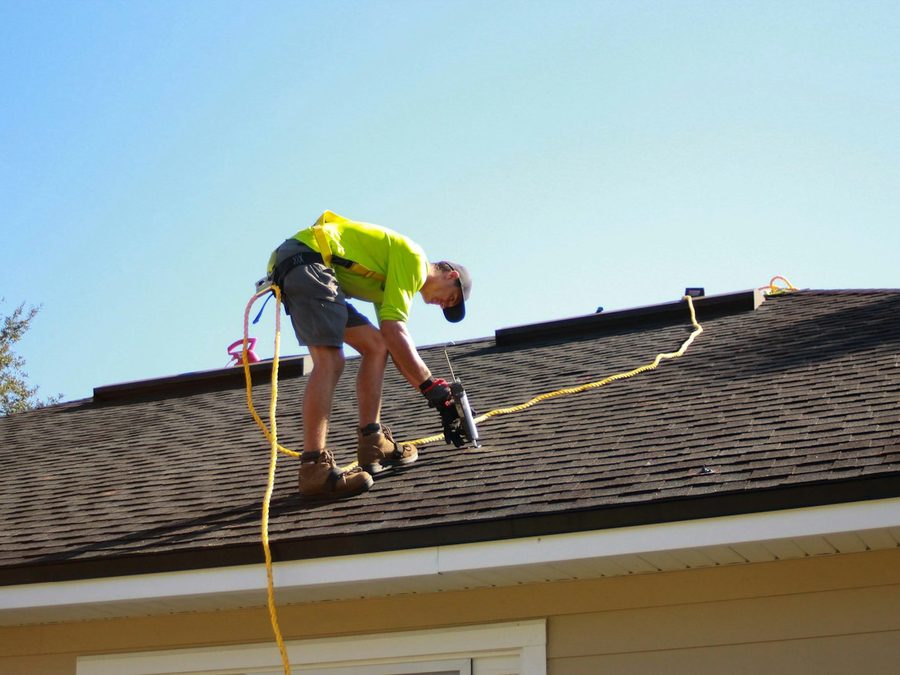
A Class 4 roof costs a few thousand more. Here’s when it actually pays you back.
Impact-resistant shingles add $2,000 to $5,000 to a re-roof. Insurer discounts run from 5 to 25 percent, none of the shingles IBHS tested earned its top score, and state grants start in 2027 at the earliest.
Get In Touch
Want to be in the magazine?
Send us a story idea, an interview request or an event. We hear from owners, chambers and industry groups all over Weld, Larimer and Boulder counties. It costs nothing and we decide what runs.
Pitch a Story