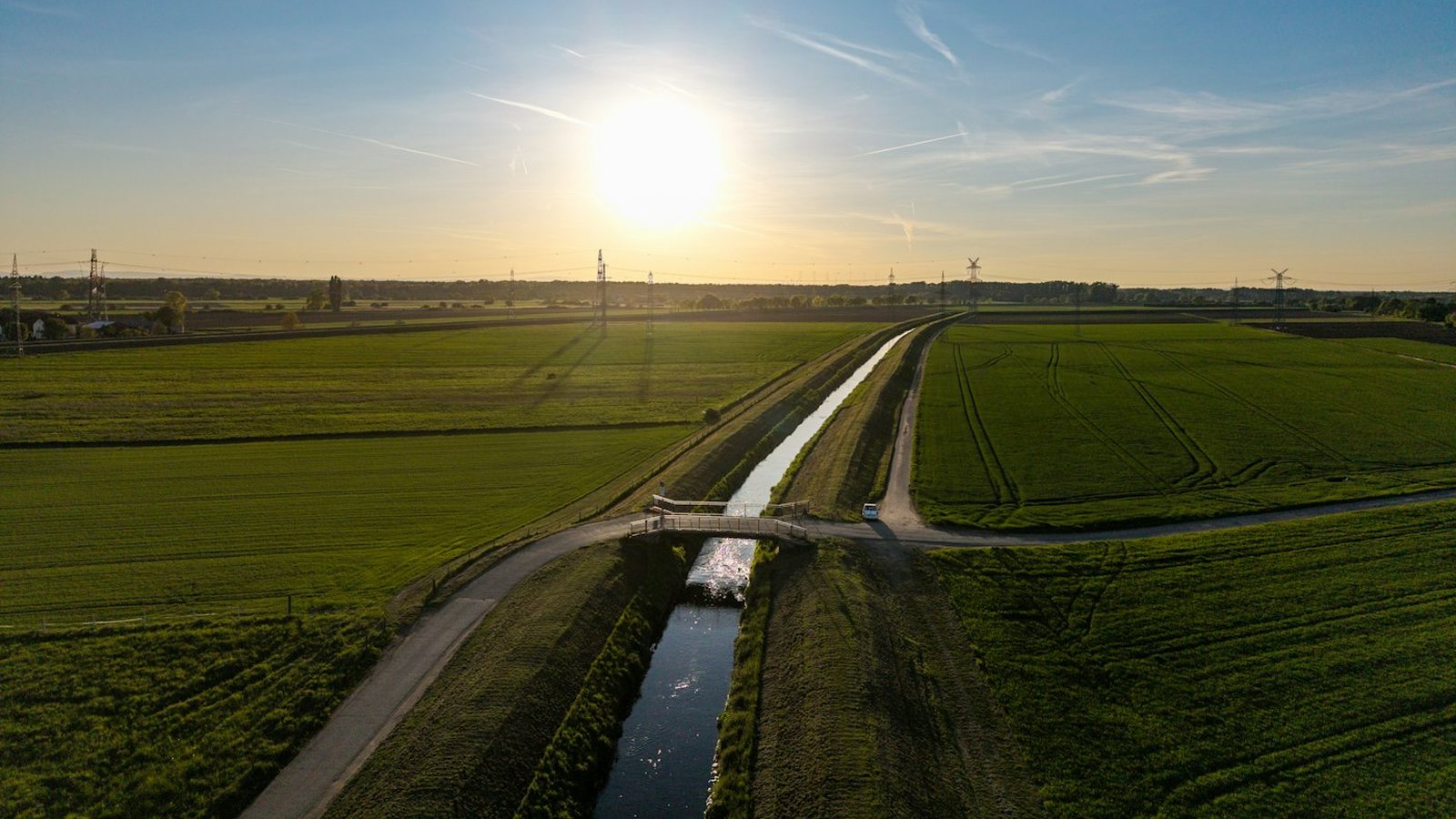
An irrigation canal running between fields. Almost everything that grows or gets built on the Front Range runs on water moved by ditch. Photo: Bernd Dittrich / Unsplash
When the Northern Integrated Supply Project was proposed in the early 2000s, it was expected to cost about $350 million. By last August the estimate was $2.69 billion. In between, the project spent two decades in permitting and litigation, and came out the other side with something few Western water projects ever get: every approval it needs, and nobody left suing it.
That should have been the good news. Instead, the last twelve months have been the hardest in the project’s history, and the reasons matter to anyone in Northern Colorado who plans to build, buy or expand on land that does not already have water attached to it.
What it is, and what it was
NISP is run by Northern Water and was designed to deliver up to 40,000 acre-feet of new water a year to fifteen towns and water districts. The centerpiece is Glade Reservoir, a 170,000-acre-foot lake to be built northwest of Fort Collins where US 287 currently runs, which means relocating about seven miles of highway. A second reservoir, Galeton, was planned northeast of Greeley, along with roughly fifty miles of pipeline.
The permits are done. Larimer County approved the land-use permit in September 2020, on a 2–1 vote. The Army Corps of Engineers issued its Clean Water Act permit in December 2022. In February 2025 the environmental group Save the Poudre settled its federal lawsuit in exchange for $100 million paid over twenty years into a Poudre River improvement fund, ending about twenty years of organized opposition. And this May the Colorado Supreme Court confirmed that the project’s enterprise has eminent domain power, upholding its condemnation of a pipeline easement in Weld County.
Then the partners started leaving
The Fort Collins-Loveland Water District, which had signed up for 8,100 acre-feet, about a fifth of the project, and had already put in roughly $34 million, withdrew in August 2025. Eaton followed in September. Evans, with $5.7 million invested, voted to leave in October. By June of this year six of the original fifteen were gone, leaving nine: Erie, Frederick, Windsor, Lafayette, Fort Morgan, Dacono, Fort Lupton, the Left Hand Water District and the Central Weld County Water District.
Northern Water responded by shelving Galeton until Glade is under way. That cuts the project’s annual yield roughly in half, to about 20,000 acre-feet, and brings the Glade-only cost to around $2 billion. Erie, now the largest remaining partner at about 23 percent, trimmed its own subscription from 6,500 to 4,500 acre-feet and projects the finished water will cost it $85,000 to $95,000 per acre-foot. Northern Water’s current schedule has procurement this year and construction of Glade beginning in 2027; the trade press has put first water around 2031.
A project that spent twenty years fighting for permission now has it, and is discovering that permission was the easy part.
The reservoir that is already built
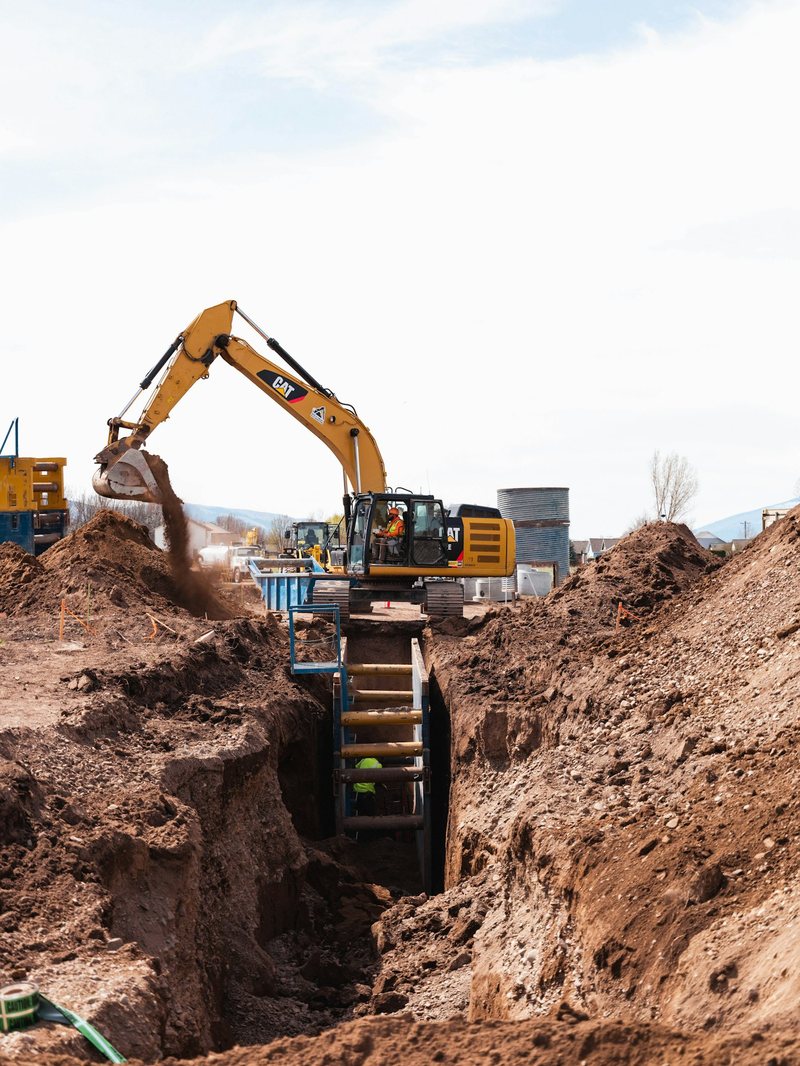
Twenty miles south, the other big Northern Colorado storage project is finished and sitting nearly empty. Chimney Hollow Reservoir, a 90,000-acre-foot lake west of Carter Lake with a 350-foot dam, was built between 2021 and 2025 at a cost that KUNC puts at roughly half a billion dollars. Its twelve participants include Loveland (10,000 acre-feet), Greeley (9,189), Longmont (7,500) and Erie (6,000). Initial filling began April 21 and stopped twelve days later, at less than 2 percent of capacity, when testing raised questions about naturally occurring uranium in the rock used to build the dam. As of the end of May, no water will be released downstream until that is resolved.
What this does to a lot
Water is the line item in a Northern Colorado development that outsiders never see and locals never forget. The Fort Collins-Loveland Water District’s 2026 fee schedule prices raw water at $120,000 an acre-foot. A single-family tap on the smallest lot, under 3,000 square feet, comes to $55,685 before sewer: a $37,175 plant investment fee, $18,000 for the water itself and $510 for the meter. Larger lots need more water; over 11,000 square feet the requirement rises to 0.63 acre-feet. The North Weld County Water District charges $36,750 for raw water plus a $21,900 plant fee on a standard residential tap. Greeley requires new single-family development to dedicate three acre-feet per developed acre, in shares, Colorado-Big Thompson units, Terry Ranch credits or cash.
The market for those C-BT units tells its own story. Northern Water’s own price table shows a unit at about $57,500 in 2025, down from $67,000 in 2023. Broker data reported by the Colorado Sun puts the 2025 figure higher, near $85,000, but also falling, from a 2022 peak around $101,000. The explanation in both cases is the same: home construction flattened and the state cut its population-growth forecast, so demand for new water softened. Cheaper water for a buyer today; a weaker demand signal for the projects meant to serve growth tomorrow. The 2026 C-BT quota was set at 80 percent, meaning each unit delivers 0.8 acre-feet this year.
Fort Collins decides
The City of Fort Collins, a separate entity from the Fort Collins-Loveland district, formally opposed NISP in 2015 and has never been a participant. Its own plan has been to enlarge Halligan Reservoir, north of town, from about 6,400 to 14,600 acre-feet, at a 2022 estimate of $308 million; Larimer County approved that permit unanimously in March 2025. According to the Colorado Sun, the city’s utility is now evaluating whether buying storage in Glade would be cheaper than building Halligan, with a decision expected by the end of this year. If Fort Collins joins the project it opposed for a decade, NISP’s finances change materially, and so does the city’s capacity to grow.
What to do with this
New regional supply arrives in the 2030s, not before; any project in this decade runs on water that exists today. If you are developing, the water on a Fort Collins-area lot is a $50,000-plus line before sewer, and it belongs in the pro forma whether or not the seller mentions it. If you are buying C-BT units, prices are off their peak and quota is high; that is a buyer’s moment and a seller’s warning. If your business is in Windsor, Erie, Frederick, Dacono or Fort Lupton, your town is carrying the NISP bet, and its water rates over the next decade will reflect that. And watch what Fort Collins decides in December.
Northern Colorado water at a glance
- NISP cost
- $2.69B (Aug. 2025) vs ~$350M when proposed
- NISP yield
- ~20,000 AF/yr with Galeton deferred, from 40,000
- Partners
- 9 of the original 15 remain
- Glade construction
- Anticipated 2027; first water ~2031
- FCLWD tap, 2026
- $55,685 for the smallest single-family lot
- C-BT unit, 2025
- $57,500 (Northern Water) to $85,000 (broker data); 2026 quota 80%
Sources
- Northern Water, NISP project overview
- Northern Water, Save the Poudre settlement (Feb. 28, 2025)
- Northern Water, Larimer County 1041 approval (Sept. 2020)
- US Army Corps of Engineers, Section 404 permit (Dec. 9, 2022)
- Colorado Politics, Supreme Court eminent domain ruling (May 4, 2026)
- Colorado Sun, NISP cost reaches $2.7 billion (Aug. 27, 2025)
- BizWest, Eaton withdraws from NISP (Sept. 26, 2025)
- Colorado Sun, cities drop out of NISP (Oct. 17, 2025)
- BizWest, NISP construction outlook (Nov. 23, 2025)
- Colorado Sun, Northern Water winning some, losing some (June 10, 2026)
- Northern Water, Chimney Hollow Reservoir Project
- Northern Water, Chimney Hollow initial fill (April 2026)
- KUNC, uranium testing at Chimney Hollow (May 31, 2026)
- Fort Collins-Loveland Water District, tap fee schedule effective Jan. 1, 2026
- North Weld County Water District, tap fee schedule
- City of Greeley, raw water dedication requirements
- Northern Water, C-BT unit market price history
- Colorado Sun, Colorado water prices (April 24, 2026)
- BizWest, Northern Water sets 2026 quota at 80% (April 9, 2026)
- CBS Colorado, Fort Collins opposes NISP as planned (Sept. 2015)
- City of Fort Collins, Halligan Water Supply Project

If software touches your hiring, Colorado's new AI law applies to you. The clock starts January 1.
SB 26-189 repealed the 2024 AI Act and replaced it with a lighter framework. The impact assessments are gone. The notice duties are not, and they reach employers of every size.

Weld's food bank is spending ten times more on food. Local employers are now the swing donor.
Federal deliveries fell and demand rose. The Greeley food bank now buys nearly ten times the food it did five years ago, and local employers are the swing donor.

Weld just overtook Larimer. Here's who is moving in, and what it means for your business.
Weld added more residents last year than any county in Colorado and now outnumbers Larimer. Three of the state’s five fastest-growing cities are inside its borders.
Get In Touch
Want to be in the magazine?
Send us a story idea, an interview request or an event. We hear from owners, chambers and industry groups all over Weld, Larimer and Boulder counties. It costs nothing and we decide what runs.
Pitch a Story