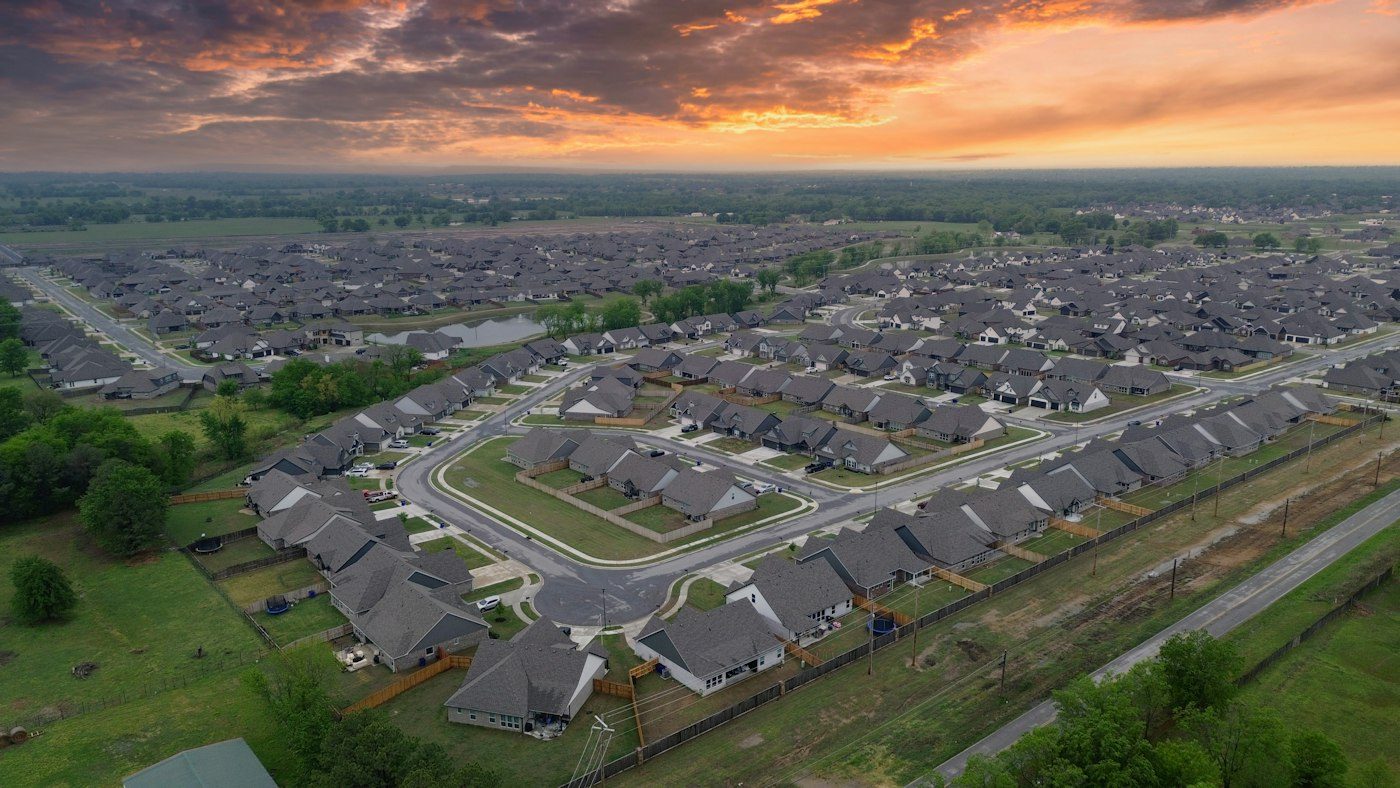
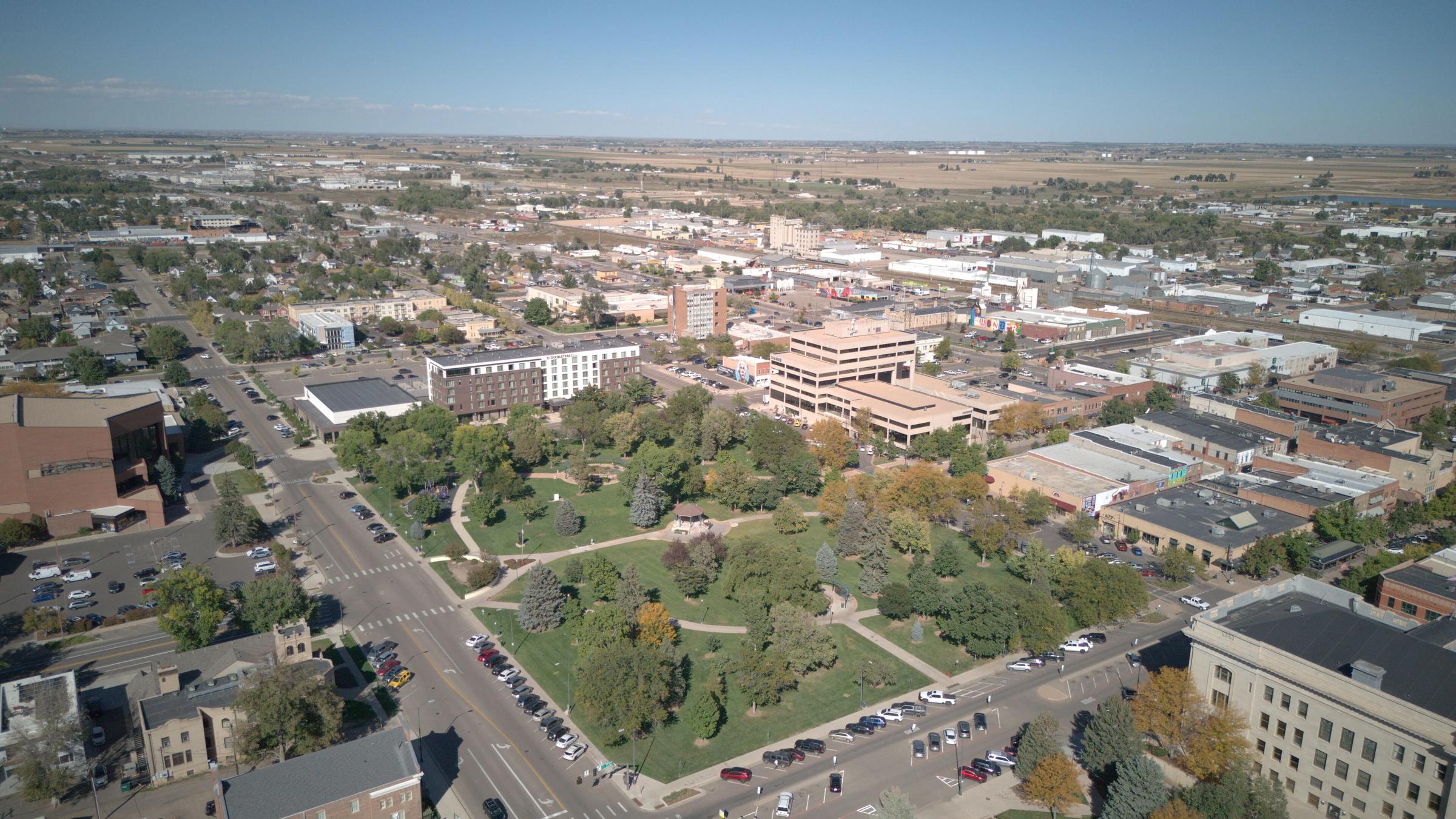
A new subdivision spreads across open ground. Weld added 7,146 people in twelve months, the largest gain of any Colorado county. Photo: Tyler Fulk / Unsplash
In the population estimates the Census Bureau released this spring, Weld County counted 378,426 residents on July 1, 2025. Larimer counted 377,292. It is the first time on record that Weld has been the larger of the two, and the gap is set to widen: Weld grew 1.9 percent in a year while Larimer grew 0.8 percent and Boulder County shrank.
The number matters less than what is underneath it. Weld added 7,146 people in twelve months, the largest gain of any Colorado county. Of that, about 6,000 was people moving in, not births. The State Demography Office attributes it to two things that are hard to argue with: jobs, and housing people can afford.
Where the people are actually going
Not, for the most part, to downtown Greeley. Three of Colorado’s five fastest-growing cities are in Weld: Erie, Windsor and Johnstown. Johnstown, straddling the Weld–Larimer line, was the tenth fastest-growing city in the United States among places over 20,000 people, up 8.4 percent in a year to 22,433 residents.
Greeley itself stands at 115,073, up 5.8 percent since the 2020 census. Steady, not spectacular. The growth is running along I-25 and US 34, in commuter towns that did not have a grocery store twenty years ago. If your customers are households, that is where the new ones are.
Jobs are growing here, and shrinking next door
Weld County employment reached 121,900 in March 2025, up 2.6 percent in a year, the eighth-largest gain among the nation’s large counties. Over the same twelve months Larimer County lost 0.5 percent of its jobs and Denver lost 1.0 percent. Inside the city limits, Greeley’s job count rose 4.4 percent in the fourth quarter of 2025 and first-quarter retail sales came in at $1.78 billion, up 21 percent on the year.
The catch is pay. Weld’s average weekly wage was $1,373 in early 2025, against $1,458 in Larimer and $2,244 in Denver. That is a cost advantage for an employer and a recruiting problem for the same employer, because Fort Collins is twenty-five minutes away. Weld’s cost-of-living index sits at 104.8 (the national average is 100), versus 108.7 in Larimer, 117.1 in Boulder and 125.2 in Denver. The gap is the whole story: people move here because it costs less, and businesses pay less because people moved here.
People move here because it costs less, and businesses pay less because people moved here. Both halves of that are true at once, and neither is permanent.
What the economy is still made of
The growth headlines are about rooftops, but the base has not changed. Weld sold $2.39 billion of agricultural products in the last federal farm census, first in Colorado and eleventh among all US counties, with livestock making up about four-fifths of it. The county produces more than 80 percent of Colorado’s oil and more than half its natural gas. The three largest private employers are a beef plant (JBS, roughly 5,000 people), a hospital (Banner’s North Colorado Medical Center, about 3,700) and a wind-turbine manufacturer (Vestas, about 2,600).
What is new is the layer on top. JBS announced a $50 million distribution center at its Greeley plant in early 2025. The University of Northern Colorado’s College of Osteopathic Medicine, a $127.5 million building on 20th Street, enrolled its first class of 80 students this fall and is designed to graduate 150 physicians a year. And the state’s Economic Development Commission approved incentives this year for two manufacturers weighing Weld against another county: a cardiovascular-device maker (190 jobs at an average wage over $107,000) and a counter-drone defense firm (171 jobs, average wage near $114,000). Neither has announced a final site.
What is being built
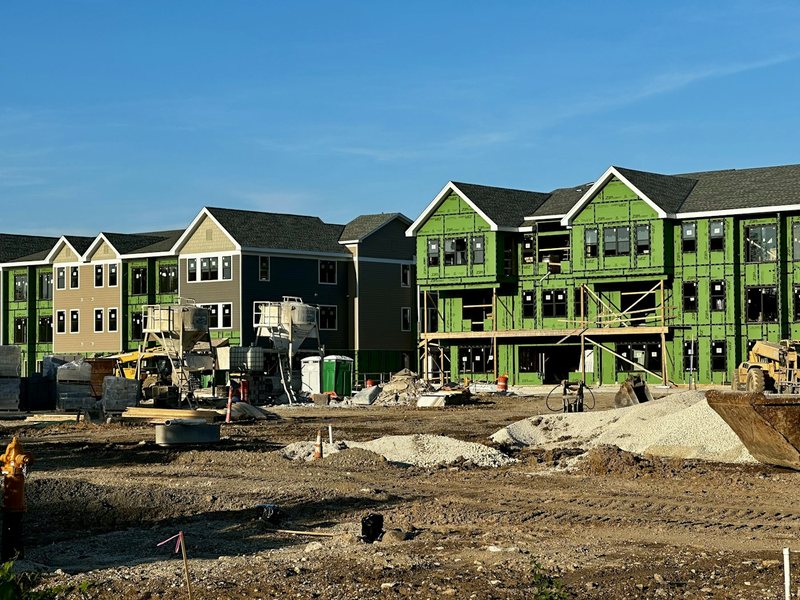
Housing permits in the Greeley metro area ran to 2,164 units in the first seven months of 2026, about 14 percent ahead of the same stretch in 2025. But look at the mix: of the 370 residential permits Greeley issued in the first quarter, 308 were multifamily. The city’s industrial and flex space is 3.5 percent vacant, retail 3.7 percent, and the median detached home sold for $434,023, down 2 percent on the year. Apartments are being built; houses are getting slightly cheaper; warehouses are full.
The one large project everyone is watching is the one that is stuck. The proposed Catalyst district in west Greeley, a 100-acre entertainment development with a 10,000-seat arena, a 411-room hotel and a branded indoor water park, ran into two walls this year. Greeley voters repealed its zoning in a February ballot measure whose validity is now in court, and on July 20 Weld County commissioners declined to back its bonds, a decision the city estimated would cost the project about $100 million in higher borrowing costs. Whether it is built, and when, is an open question.
What to do with this
Four things follow for an owner or executive in the county. If you sell to households, your growth is in Windsor, Johnstown and Erie, and your marketing and your delivery radius should say so. If you compete for staff, the Larimer wage gap is real and your people know it; the cost-of-living advantage only works as a retention argument if you make it out loud. If you build or lease, the pipeline is multifamily, not single-family, and industrial space is scarce enough that renewals are a negotiation. And if any part of your plan depends on the Catalyst project or the traffic it would bring to west Greeley, do not put a date on it.
Weld County at a glance
- Population
- 378,426 (July 2025), now larger than Larimer
- One-year growth
- +7,146 residents, 1.9%, most of any Colorado county
- Jobs
- 121,900 (March 2025), +2.6% year over year
- Average weekly wage
- $1,373 vs $1,458 in Larimer
- Cost of living
- 104.8 (US = 100); Boulder 117.1, Denver 125.2
- Housing permits
- 2,164 units Jan–Jul 2026, +14%
Sources
- US Census Bureau Vintage 2025 county estimates, via KUNC/BizWest (March 30, 2026)
- Colorado State Demography Office press release (March 26, 2026)
- CPR News, “Weld County leads Colorado population growth” (Aug. 24, 2026)
- US Census Bureau, Vintage 2025 city and town population estimates (May 14, 2026)
- US Census Bureau QuickFacts: Greeley city, Colorado
- US Bureau of Labor Statistics, County Employment and Wages in Colorado, Q1 2025
- City of Greeley Quarterly Economic Update (June 2026)
- Upstate Colorado Economic Development, Weld County Economic and Demographic Profile 2026
- USDA NASS, 2022 Census of Agriculture, Weld County profile
- BizWest, “Weld County continues to dominate state’s oil and gas scene” (Oct. 3, 2025)
- Denver7, JBS $50 million Greeley expansion (Feb. 2025)
- University of Northern Colorado, College of Osteopathic Medicine
- Colorado OEDIT, EDC-approved incentives, March and June 2026
- Federal Reserve Bank of St. Louis (FRED), Greeley MSA housing permits
- BizWest, “Weld County rejects joining Catalyst project” (July 31, 2026)

If software touches your hiring, Colorado's new AI law applies to you. The clock starts January 1.
SB 26-189 repealed the 2024 AI Act and replaced it with a lighter framework. The impact assessments are gone. The notice duties are not, and they reach employers of every size.
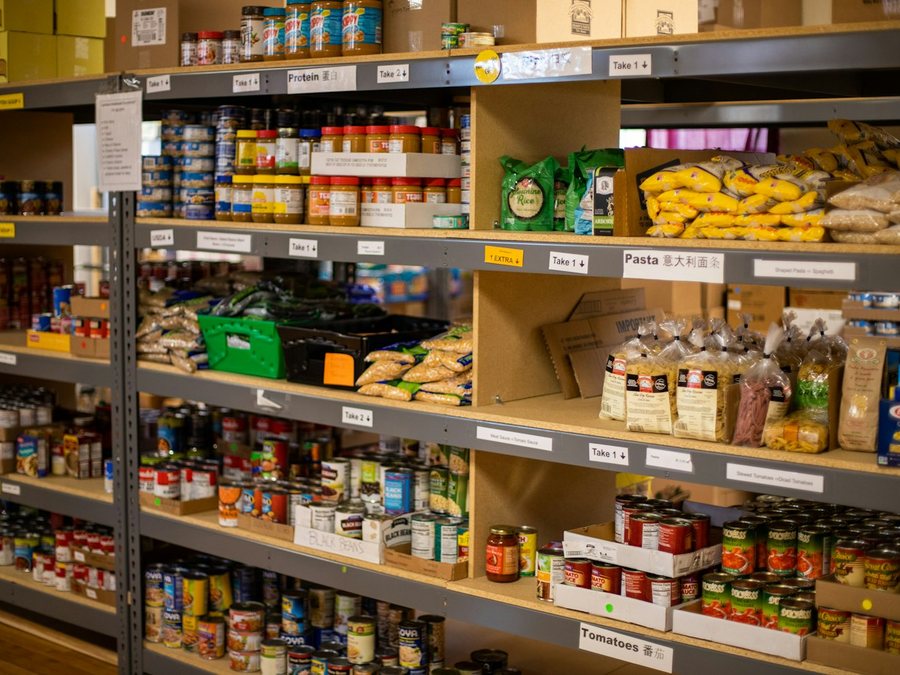
Weld's food bank is spending ten times more on food. Local employers are now the swing donor.
Federal deliveries fell and demand rose. The Greeley food bank now buys nearly ten times the food it did five years ago, and local employers are the swing donor.
Colorado's $7.5 billion venture boom is building factories up I-25.
Colorado venture funding hit $7.46 billion in 2025. The rounds are in Boulder and Denver; the manufacturing is showing up in Loveland, Berthoud and Longmont.
Get In Touch
Want to be in the magazine?
Send us a story idea, an interview request or an event. We hear from owners, chambers and industry groups all over Weld, Larimer and Boulder counties. It costs nothing and we decide what runs.
Pitch a Story