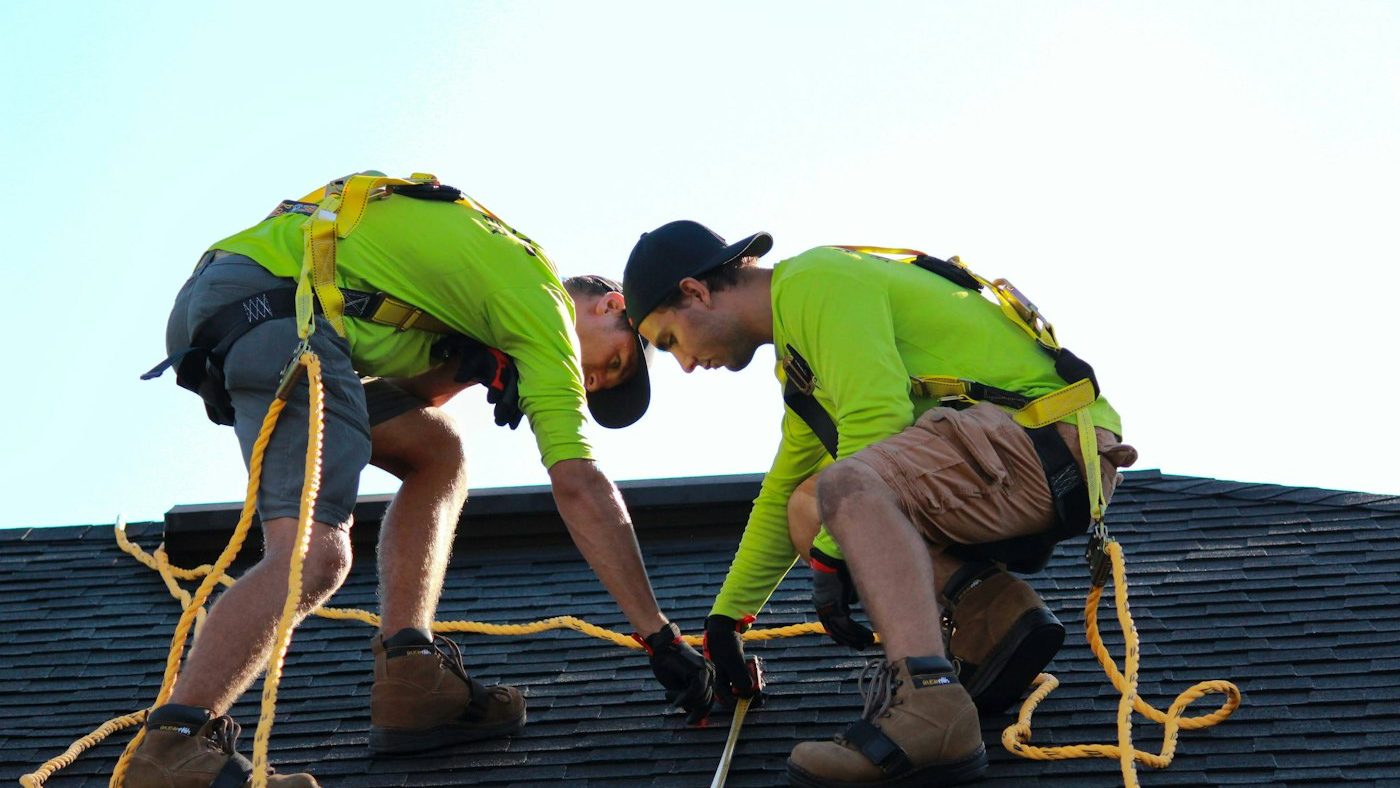
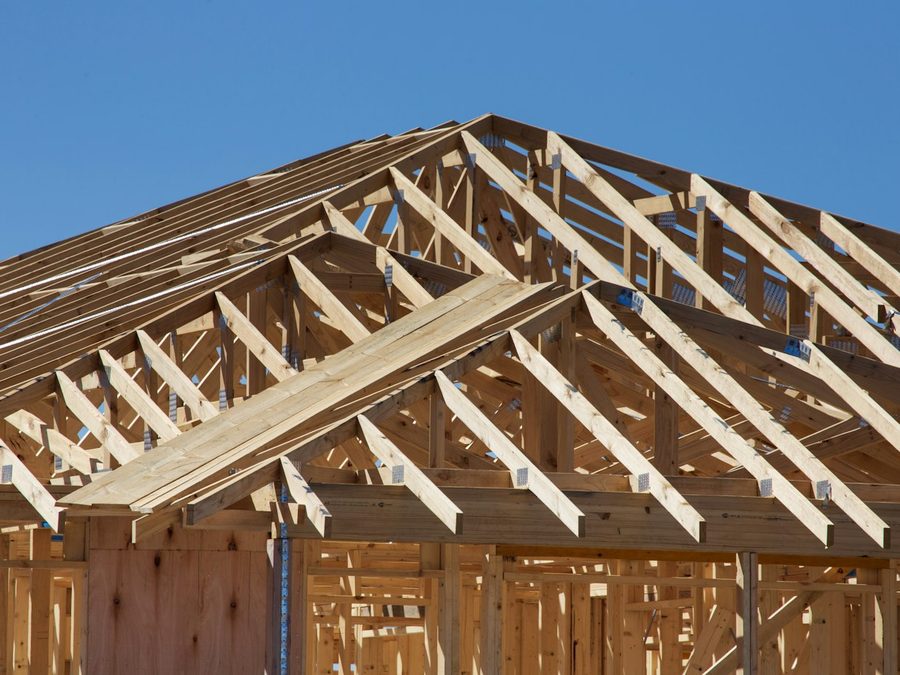
A roofing crew lays new shingles. Colorado insurers discount impact-resistant roofs by anywhere from 5 to 25 percent. Photo: Raze Solar / Unsplash
On the Front Range, hail is about half of what you pay for homeowners insurance. The Division of Insurance’s analysis of twenty carriers put hail at between 26 and 54 percent of the premium across the counties it studied, and roughly 50 percent along the Front Range. The Rocky Mountain Insurance Information Association counts three or four catastrophic hailstorms a year in Colorado and more than $5 billion in insured hail damage over the past decade.
So the most important line on your policy is really the roof. The question owners keep asking is whether paying extra for an impact-resistant one is worth it. The answer depends on your carrier, your town and the product, and the label on the bundle guarantees less than most people assume. (For why rates have climbed in the first place, see our earlier briefing on the insurance market.)
What “Class 4” actually means
Class 4 is the top rating under the UL 2218 test. A two-inch steel ball is dropped from 20 feet, twice on the same spot, and the shingle passes if neither side cracks. Classes 1 through 3 use smaller balls from lower heights. A competing standard, FM 4473, fires ice balls instead and uses the same one-to-four scale.
The trouble is that a steel ball is not a hailstone. Last November the Insurance Institute for Business & Home Safety published its own ratings, made with lab-grown hailstones, covering about 95 percent of the market. Of 23 products rated, 18 were “Good,” five were “Marginal,” and none earned “Excellent.” IBHS says Marginal or Poor products are not recommended for hail-prone regions. “Not every product delivers on that promise,” said IBHS chief engineer Anne Cope. Colorado buys about 10 percent of the impact-resistant shingles sold in the U.S.; Texas buys 43 percent.
Age matters too. An IBHS study published last fall found that shingles exposed to weathering and small hail under an inch were about ten times more susceptible to damage in a later severe storm. A roof that tested well new is not necessarily the roof you will have in year eight.
Buy the rating, not the label. None of the shingles IBHS tested last year earned its top score.
What it costs
The Colorado Roofing Association, a trade group, puts the Class 4 premium at about $1 to $1.50 per square foot of material, or roughly $2,000 to $3,000 on a 2,000-square-foot house, and 10 to 20 percent of the project. A full re-roof in Colorado runs $9,500 to $24,000. Insurance Commissioner Michael Conway has put the added cost of a fortified roof on a house that size at $3,000 to $5,000, which is the more conservative number to plan around.
What it saves
Colorado insurers discount impact-resistant roofs by about 5 to 25 percent, depending on the carrier. There is no required minimum, and the Colorado Sun’s advice is blunt: discounts “differ from company to company. Ask your insurance company.” For comparison, Texas insurers commonly give 20 to 35 percent on the dwelling portion of the policy.
Run the math before you sign. At Colorado’s average premium of about $4,310, a 5 percent discount is worth about $215 a year and a 25 percent discount about $1,080. Against a $2,000 to $5,000 upgrade, the payback runs anywhere from two years to more than twenty. The Division of Insurance’s own estimate of the savings, $82 to $387 a year depending on the county, sits toward the low end of that range. The bigger payoff is the claim you never file, and the deductible you never pay.
In some places the decision has already been made for you. Unincorporated Larimer County requires Class 4 impact-resistant shingles for all new construction, repairs over 25 percent and roof replacements. Several Northern Colorado towns have adopted similar rules on their own schedules, so check with your building department before you compare quotes.
The grant money, and when it arrives
SB26-155, signed in June, creates the Strengthen Colorado Homes Enterprise inside the Division of Insurance, run by a seven-member board. Beginning in 2027 insurers pay a fee of 0.5 percent of premium, and at least 85 percent of the money goes to roof grants. Priority goes to primary residences, weighing household income, roof age, home size and exposure to severe weather. Grantees will have to follow IBHS standards, pull permits and hire licensed contractors who do not waive deductibles. Rules cannot be adopted before January 1, 2027.
Conway has said he expects grants “in the neighborhood of $7,500 to $10,000”, but the amounts will be set by the board, which the Division began recruiting in June. No money flows before 2027. Anyone selling a roof in 2026 on the promise of a state grant is ahead of the law.
Hiring the roofer
Colorado has no state roofing license; licensing is local, and uneven. Fort Collins licenses roofers in two classes and requires $2 million in aggregate general liability and an ICC exam. Unincorporated Larimer County requires a roofer license, $300,000 in liability coverage and an exam or a license from another jurisdiction. Greeley will require a city contractor license before any permit starting January 1, 2027.
State law fills in some of the gaps. A residential roofing contract must be written and signed, list the scope, dates, cost and insurer details, and give you 72 hours to cancel with a full refund of the deposit. If your insurer denies the claim, you have 72 hours to cancel and the contractor has ten days to refund you. And a contractor “shall not advertise or promise to pay, waive, or rebate” your deductible. The Division’s advice after a storm is to be wary of anyone who knocks first and to work with Colorado-based contractors when possible.
Read the policy before the next storm
A better roof will not help if the policy will not pay for it. Adjusters report owners discovering cosmetic-damage exclusions on metal roofs, or actual-cash-value roof coverage that pays about half of replacement. Others find a payment schedule tied to roof age. All of these are easier to change at renewal than after a claim.
If you own a commercial building
Low-slope commercial roofs are rated differently, under FM 4470. The higher of its two hail ratings, VSH, tests with a two-inch ice ball at about 152 to 160 feet per second, meant to represent hail up to two and a half inches. Colorado is one of 14 states FM designates for that very-severe-hail rating. If you are replacing a flat roof on a shop or warehouse, ask for a VSH-rated assembly, and ask your carrier in writing what it does to the premium.
What to do
Ask for a shingle rated “Good” on IBHS’s list, not just one stamped Class 4; the FORTIFIED standard already requires that rating, and the grant rules are expected to follow IBHS. Get your insurer’s discount in writing before you sign, and work out your own payback. Check whether your county or town already requires Class 4. Keep product documentation and permits in case grants apply later. Check the contractor’s local license, insist on the written contract state law requires, and walk away from anyone offering to cover your deductible.
Class 4 roofs at a glance
- Hail share of premium
- 26%–54% by county; ~50% on the Front Range
- Added cost, 2,000 sq ft home
- $2,000–$3,000 (trade group); $3,000–$5,000 (Division of Insurance)
- Full re-roof in Colorado
- $9,500–$24,000
- Insurer discounts
- About 5%–25%, varies by carrier
- IBHS 2025 ratings
- 18 Good, 5 Marginal, 0 Excellent
- State roof grants
- Expected $7,500–$10,000; 2027 at the earliest
- Deductible waivers
- Prohibited under C.R.S. 6-22-105
Sources
- Colorado Division of Insurance, hail and wildfire premium analysis (Feb. 11, 2026)
- Rocky Mountain Insurance Information Association, Colorado hail statistics
- Interlock Roofing, UL 2218 Class 4 test explainer
- IBHS, impact-resistant shingle ratings (Nov. 19, 2025)
- Roofing Contractor, IBHS 2025 shingle ratings (Nov. 26, 2025)
- Insurance Journal, IBHS study on weathering and hail (Oct. 2, 2025)
- FORTIFIED Home, hail supplement requirements
- LendingTree 2026 State of Home Insurance, as reported by ColoradoBiz (June 10, 2026)
- CPR News, hail and homeowners premiums (Feb. 11, 2026)
- Colorado Roofing Association, Class 3 vs. Class 4 shingles (May 29, 2026)
- Colorado Sun via InsuranceNewsNet, homeowners insurance discounts and grants (July 18, 2026)
- Claims Journal, impact-resistant roof discounts (Sept. 16, 2026)
- Larimer County Building, roofing requirements (updated Jan. 6, 2026)
- Colorado General Assembly, SB26-155
- Colorado Division of Insurance, call for Strengthen Colorado Homes board applicants (June 11, 2026)
- Colorado Roofing Association, roofing licensing in Colorado (Dec. 18, 2023)
- C.R.S. 6-22-103, residential roofing contracts
- C.R.S. 6-22-104, cancellation after insurance denial
- C.R.S. 6-22-105, deductible rebates prohibited
- City of Fort Collins, contractor licensing
- City of Greeley, contractor license required for permits from Jan. 1, 2027 (Aug. 10, 2026)
- Larimer County, contractor licensing
- Colorado Division of Insurance, tips after a storm (May 31, 2024)
- CBS Colorado, hail claims advice from an adjuster (June 3, 2026)
- Colorado Roofing Association, before you file a claim (Nov. 14, 2025)
- Builders Group, Q&A with FM Approvals on hail ratings (2021)
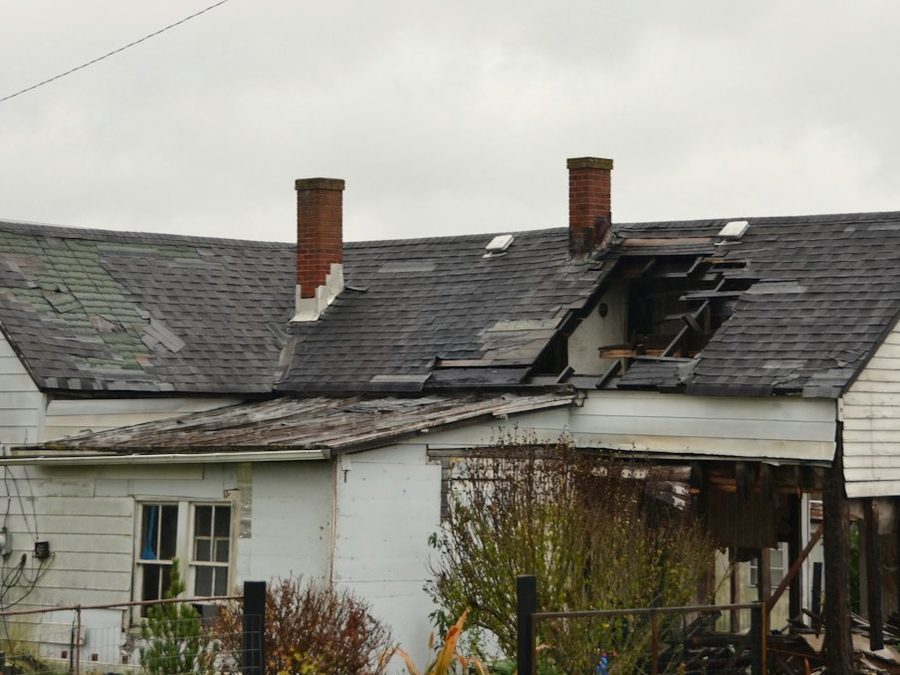
Your property insurance has doubled since 2020. Blame hail, not wildfire.
Colorado’s home insurance rates doubled in five years, the fastest rise in the country. The state now says hail is the main reason, and two new laws start to deal with it.
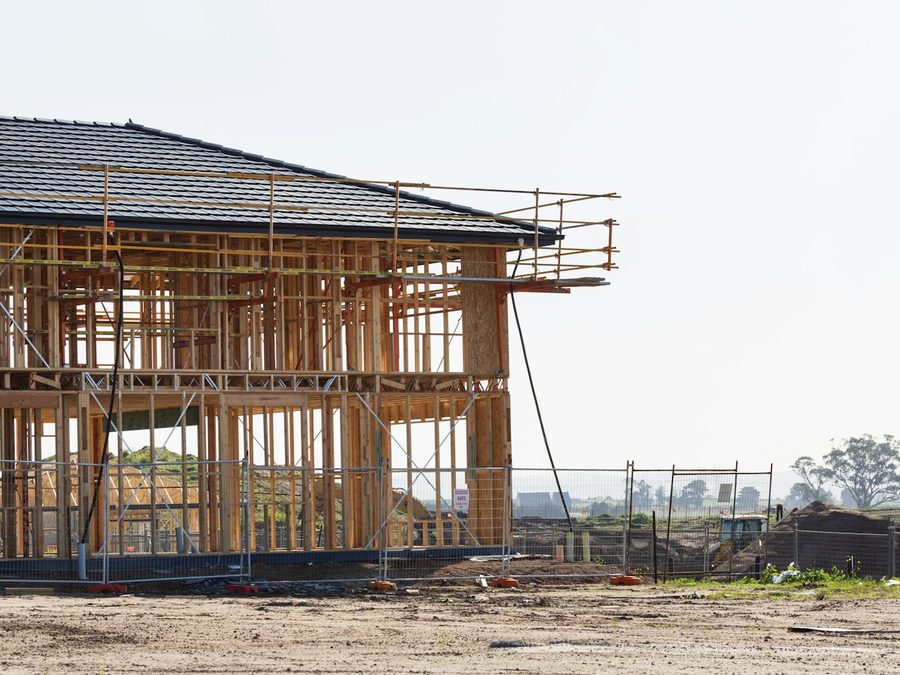
Colorado builders have the work. What they can’t find is the crew.
Colorado contractors report credential and skill gaps well above national rates. In Weld, where one job in ten is in the trades, retirements, enforcement and a new data center are squeezing the same crews.
Weld just overtook Larimer. Here's who is moving in, and what it means for your business.
Weld added more residents last year than any county in Colorado and now outnumbers Larimer. Three of the state’s five fastest-growing cities are inside its borders.
Get In Touch
Want to be in the magazine?
Send us a story idea, an interview request or an event. We hear from owners, chambers and industry groups all over Weld, Larimer and Boulder counties. It costs nothing and we decide what runs.
Pitch a Story